
WPC Manufacturer vs Trading Company: How to Choose the Right Partner for Your Project
When planning a WPC (Wood-Plastic Composite) project, one of the most critical decisions is choosing the right supplier. Should you work directly with a WPC manufacturer or go through a WPC trading company? This decision can significantly affect your project’s cost, quality, timeline, and overall success.
In this article, we will explore the key differences between WPC manufacturers and trading companies, outline the advantages and limitations of each, and provide practical tips to help you select the right partner for your project.
Understanding WPC Manufacturers
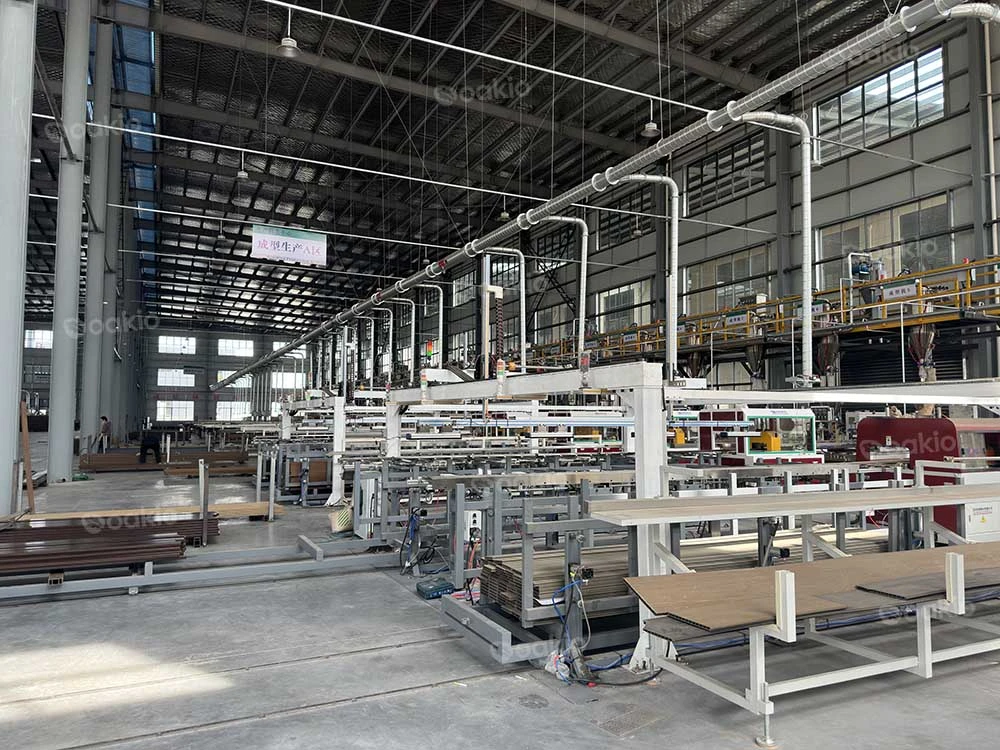
A WPC manufacturer is a company that produces wood-plastic composite materials from raw materials, processes them into finished products, and often offers OEM (Original Equipment Manufacturer) or ODM (Original Design Manufacturer) services. Working directly with a manufacturer means you are dealing with the source of the product, which can provide significant advantages, particularly for large-scale projects.
Key Advantages of Working with a Manufacturer
- Cost Control
When you source directly from a WPC manufacturer, you eliminate intermediaries. This means you avoid additional markups that trading companies often add, helping you achieve more competitive pricing, especially for bulk orders. - Stable and Consistent Product Quality
Manufacturers oversee every stage of production, from raw materials to final products. This ensures consistent quality, minimizes defects, and allows you to request specific quality standards tailored to your project requirements. - Customization and Flexibility
Many manufacturers provide OEM and ODM services, meaning they can produce products under your brand, offer custom dimensions, colors, or finishes, and even create unique formulations for specialized needs such as slip-resistant decking or UV-resistant cladding. - Large Project Supply Capability
Manufacturers can support large-scale commercial and residential projects, guaranteeing consistent supply, timely delivery, and coordinated logistics to meet tight schedules.
Potential Limitations of Working with a Manufacturer
- Minimum Order Quantities (MOQ)
Direct manufacturers often require higher minimum order quantities, which may not suit small projects or trial orders. - International Trade Experience
While many manufacturers are now globally experienced, some may have less expertise in international shipping, customs clearance, or multi-country logistics compared to specialized trading companies.
Understanding WPC Trading Companies
A WPC trading company acts as an intermediary between manufacturers and end customers. They purchase products from manufacturers and handle sales, logistics, and sometimes minor customization. Trading companies are especially common in international trade, helping customers navigate sourcing challenges.
Key Advantages of Working with a Trading Company
- Flexible Ordering
Trading companies can often accommodate smaller orders, making them ideal for pilot projects, sample testing, or small-scale installations. - Multiple Brand Options
A trading company typically sources from multiple manufacturers. This allows customers to compare brands, products, and specifications without engaging multiple manufacturers individually. - Expertise in International Logistics
Trading companies often handle shipping, customs clearance, and export documentation. This can save time and reduce the complexity for buyers who are unfamiliar with international trade procedures.
Potential Limitations of Working with a Trading Company
- Higher Costs
Since trading companies add their margin to the product price, costs are usually higher than purchasing directly from a manufacturer. - Limited Customization
Trading companies are less flexible in offering OEM/ODM services, product modifications, or exclusive solutions. - Quality Control Reliance
Buyers depend on the trading company to ensure quality. The actual manufacturer’s quality processes are often one step removed, which may increase the risk of inconsistencies.

Key Differences Between WPC Manufacturers and Trading Companies
| Feature | WPC Manufacturer | WPC Trading Company |
| Cost | Lower (direct pricing) | Higher (includes intermediary margin) |
| Quality Control | Full control over production | Depends on supplier; indirect control |
| Order Flexibility | Usually higher MOQ | Flexible, can handle small orders |
| Customization/OEM | Strong capability | Limited options |
| Project Support | Large-scale project experience | Mostly small/medium-scale orders |
| International Logistics | Depends on manufacturer | Typically very experienced |
How to Choose the Right Partner for Your Project
Selecting the right WPC supplier depends on your project’s specific needs, budget, and timeline. Here are key considerations:
1. Project Type
- Large Commercial or Residential Projects: Directly partnering with a WPC manufacturer is usually more cost-effective and ensures consistent supply.
- Small-Scale or Trial Projects: A trading company can offer flexibility with smaller order sizes and multiple brand options.
2. Quality Requirements
If your project demands high-quality, customized solutions (e.g., slip-resistant decking for pools, fire-resistant cladding), manufacturers are better positioned to meet your requirements.
3. Budget Considerations
For projects with tight budgets, sourcing directly from a manufacturer often reduces costs, as there are no intermediary markups.
4. Timeline and Logistics
If your project has a tight deadline or requires fast shipping, trading companies may provide convenience by handling logistics, customs, and documentation on your behalf.
5. Case Example
At Oakio, we combine the advantages of being a manufacturer with global project experience. We offer OEM/ODM services, handle international logistics, and provide solutions for both small and large-scale projects. This makes us an ideal partner for customers who want high-quality WPC products with reliable project support.
Why Oakio Stands Out as a WPC Manufacturer
Choosing the right WPC manufacturer can make a significant difference in your project outcome. Here’s why Oakio is trusted by global partners:
- Comprehensive Product Line: Oakio produces WPC decking, cladding, fencing, and pergolas, offering a complete WPC solution for outdoor and interior projects.
- Global Export Experience: Our products are available in over 40 countries, backed by proven logistics and compliance expertise.
- Customization & OEM/ODM: We support branding, color options, and tailored designs to meet unique project requirements.
- Quality and Safety: Oakio uses high-performance WPC materials, including co-extruded layers and slip-resistant finishes, ensuring durability, safety, and aesthetic appeal.
- Project Portfolio: From villas and resorts to commercial developments, Oakio has successfully delivered projects worldwide, demonstrating our reliability as a manufacturing partner.
By working directly with Oakio, you gain the advantages of both a reliable manufacturer and a global partner with project management expertise.
Conclusion
Deciding between a WPC manufacturer and a trading company depends on factors such as project scale, quality requirements, budget, and logistics needs.
- For cost efficiency, customization, and large-scale projects, manufacturers like Oakio are often the preferred choice.
- For flexible small orders and multi-brand options, trading companies can be convenient.
Ultimately, the best partner is one that aligns with your project goals while providing reliable support, consistent quality, and competitive pricing.
Ready to find your ideal WPC partner? Contact Oakio today to explore our product range, request samples, or discuss custom solutions for your project.
Trending Reading

How Good is Composite Lumber for Building Furniture?
Introduction Composite lumber, particularly wood-p...

Why Are Fake Wood Decks Becoming More and More Popular?
Introduction For decades, the classic wood deck sy...

Composite Decking Prices in 2025: Cost, Value, and Long-Term Benefits
In planning for a new deck, one of the first decis...

How to Take Care of Your Composite Deck Rails: A 2025 Guide
Keeping your outdoor space looking great should no...

How to Prevent These Common Composite Decking Problems
Composite decking problems are a frustrating fact ...

Composite Siding: An In-Depth Guide to the Benefits and Types
When it comes to exterior home materials, composit...

The Roof Deck: What Do I Need to Know Before I Start Building?
In recent years, roof decks have and continue to g...
Custom WPC Solutions for Sustainable Outdoor
The core concept of personalized custom furniture ...
Why Water Absorption Testing Standards Must Evolve for Co-Extruded Composite Decking
In recent years, wood-plastic composites (WPC) hav...
Water Absorption Testing of Co-Extruded Composite Decking: Performance & Standardization
In recent years, the wood-plastic composite (WPC) ...
Trending Reading

What Are the Differences Between the WPC Board and PVC Board?


[2025 Update] How Long Does WPC Decking Last?


