
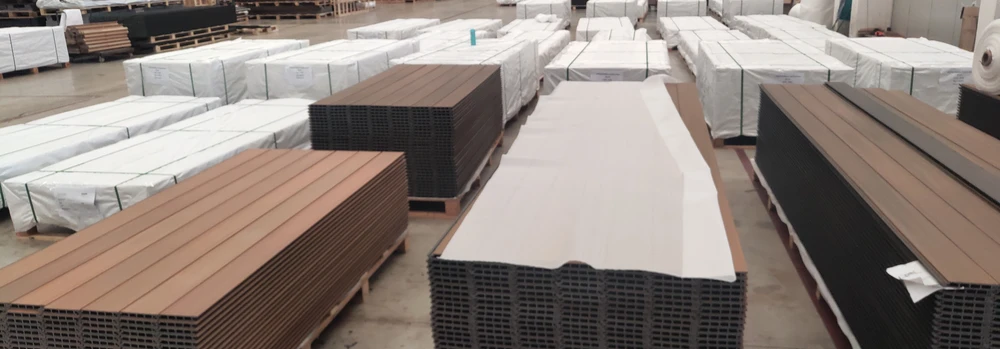
How to Evaluate Composite Decking Quality Before Ordering
Choosing a composite decking supplier is an important decision for distributors, builders, designers, and project contractors. A decking board may look good in a catalogue or on a website, but appearance alone cannot tell you how it will perform outdoors over the long term.
Before placing a bulk order, buyers should look beyond price and appearance. Material composition, manufacturing quality, weather resistance, testing, warranty terms, and the reliability of the manufacturer all need to be considered. A careful evaluation before ordering can help reduce quality issues, installation problems, and customer complaints later.
Start with the Material Composition
The materials used in composite decking have a direct influence on its performance. Most WPC decking combines wood fibre or wood flour with a polymer and various additives, but the exact formulation can differ significantly between manufacturers.
When comparing products, ask the manufacturer what type of wood fibre and polymer are used and whether recycled materials are incorporated. It is also useful to understand whether the manufacturer has a consistent formulation and quality-control process for different production batches.
Rather than assuming that a higher percentage of wood or polymer automatically means better quality, look at the complete material system and the performance it delivers.
Examine the Board’s Surface and Structure
A physical sample can tell you much more than product photographs. Examine the surface carefully for consistency in colour, texture, grooves, and finish. The edges should be clean, and the board should have a consistent profile without obvious cracks, bubbles, deformation, or other manufacturing defects.
The structure is also important. If you are evaluating hollow composite decking, check whether the internal cavities and wall thickness are consistent. For solid decking, pay attention to the density and uniformity of the board.
Dimensions are another simple but important check. Width, thickness, and profile consistency can affect installation and compatibility with the decking system.
Consider Weather and UV Resistance
Composite decking is designed for outdoor use, so its ability to withstand changing weather conditions is one of the most important quality factors.
Rain, humidity, sunlight, temperature fluctuations, and repeated wet-and-dry cycles can all affect decking over time. Before ordering, ask the manufacturer what testing has been conducted for UV exposure, water absorption, dimensional stability, and temperature changes.
Colour stability deserves particular attention. Some composite decking products may undergo an initial colour adjustment after installation before the colour stabilises. Therefore, buyers should understand the manufacturer’s expectations for normal colour change rather than assuming that “fade resistant” means the colour will never change.
Oakio, for example, offers several WPC decking ranges with different surface technologies and warranty periods. When comparing Oakio products with other manufacturers, buyers should review the technical information for the specific product rather than treating all composite decking as having the same performance characteristics.
Check Mechanical Performance
Outdoor decking needs to withstand regular foot traffic and the loads placed on it during everyday use. For commercial applications, the demands can be considerably higher.
Ask the manufacturer for relevant performance data, such as flexural strength, impact resistance, dimensional stability, and load-bearing performance. Screw-holding performance can also be important because the quality of the board and its compatibility with the fixing system can influence installation reliability.
The required performance will depend on the intended application, so a product suitable for a private residential terrace may not necessarily be appropriate for a high-traffic commercial project.
Review Fire Performance for the Target Market
Fire performance should also be considered where local regulations or project specifications require a particular classification.
Instead of relying on general descriptions such as “fire resistant,” ask the manufacturer for the actual classification and the relevant test documentation. Make sure the documentation applies to the specific decking product being considered.
This is particularly important for distributors supplying different markets, as fire-performance requirements can vary between countries and project types.
Look at the Complete Installation System
Composite decking should not be evaluated as a board alone. The clips, fasteners, joists, edge components, and installation instructions can all affect the final result.
Before ordering, ask how the decking should be installed and whether the manufacturer provides a complete installation guide. Expansion gaps, joist spacing, fixing methods, and other installation requirements should be clearly defined.
For B2B buyers, good installation support can be just as important as the product itself. A distributor may need to answer technical questions from installers and customers, so clear documentation from the manufacturer can make a significant difference.
Understand the Warranty
A long warranty can be an important indicator of a manufacturer’s confidence in its product, but the warranty period should not be considered on its own.
Read the actual warranty conditions and check what is covered, whether residential and commercial applications are treated differently, and what installation or maintenance requirements apply. It is also important to understand how the warranty treats colour change and other forms of normal weathering.
Selected Oakio composite decking products are backed by warranties of up to 25 years. However, warranty coverage varies by product, so buyers should always review the specific warranty terms before placing an order.
Request Test Reports and Technical Documentation
A professional manufacturer should be able to provide technical information supporting its product claims. Depending on the product and target market, this may include documentation covering mechanical properties, fire performance, slip resistance, weathering, or water absorption.
When reviewing documents, make sure they relate to the actual product you are purchasing. A test report for one decking range should not automatically be assumed to apply to another product with a different formulation or structure.
For distributors, keeping these documents on file can also be useful when customers or project teams request technical information during the sales process.
Always Order Samples Before a Bulk Order
Ordering samples is one of the simplest ways to evaluate a new composite decking supplier.
A sample allows you to assess the colour, surface texture, profile, dimensions, and overall manufacturing quality in person. You can also test how the decking works with the proposed clips and accessories.
For distributors, samples serve another purpose: they allow you to compare products from different suppliers and determine whether the decking meets the expectations of your target market before committing to a larger order.
A sample cannot reproduce every condition that a decking product will experience over years of outdoor exposure, but it is an essential first step before making a significant purchasing decision.
Evaluate the Manufacturer as Well as the Product
Even a high-quality decking product can become difficult to sell if the manufacturer cannot maintain consistent production, delivery, and support.
Before establishing a long-term supply relationship, look at the manufacturer’s production experience, export capabilities, quality-control procedures, production capacity, lead times, MOQ, packaging, and after-sales support.
This is especially important for distributors. Your customers expect consistent colour, dimensions, accessories, and performance when they purchase the same product for different projects. A manufacturer needs to be capable of maintaining that consistency over repeated orders.
A Practical Approach Before Ordering
The most reliable way to evaluate composite decking is to combine several types of information rather than relying on a single factor.
Start by reviewing the manufacturer’s technical information and material specifications. Then request samples and examine the physical product. Ask for relevant test reports and certification, review the warranty conditions, and discuss installation requirements with the supplier.
Finally, consider whether the manufacturer can provide the production capacity and B2B support you will need for future orders.
Final Thoughts
Evaluating composite decking quality before ordering requires more than comparing prices or choosing the most attractive colour. The material formulation, board structure, weather resistance, mechanical performance, installation system, testing, and warranty all contribute to the overall value of the product.
For distributors, builders, and designers, the manufacturer behind the product is equally important. A reliable supplier should be able to provide consistent products, clear technical documentation, dependable delivery, and appropriate support throughout the project.
Whether you are evaluating Oakio or another composite decking manufacturer, requesting samples and technical documentation before placing a bulk order is a practical way to reduce purchasing risk and make a more informed decision.
Trending Reading

How to Choose a Reliable Dark WPC Decking Supplier for Walkway Projects
Dark WPC decking is a popular choice for outdoor w...

Top WPC Distributor in the Philippines: Why Oakio Leads the Way
The construction and home improvement market in th...

Wholesale Composite Decking: A Complete Buying Guide
The wholesale composite decking market offers sign...

Composite Decking Distributor vs Manufacturer: What’s the Difference?
When sourcing composite decking for a construction...
How to Import Composite Decking from China
China has become an important sourcing destination...

What Support Should a Composite Decking Manufacturer Provide?
Choosing a composite decking manufacturer is about...

How to Choose a Reliable Composite Decking Distributor
Choosing a reliable composite decking distributor ...

Why Partner with Oakio for Long-Term WPC Wall Panel Supply
In today’s competitive construction and buil...

How to Become a WPC Wall Panel Distributor
The global construction and renovation industries ...

2026 WPC Wall Panel Design Trends Buyers Should Know
As architectural design continues to evolve, exter...
Trending Reading

What Are the Differences Between the WPC Board and PVC Board?


[2025 Update] How Long Does WPC Decking Last?


