

How to Import Composite Decking from China
China has become an important sourcing destination for composite decking, offering international buyers a wide range of products, competitive manufacturing costs, and flexible customization options. For distributors, contractors, builders, and building-material importers, working directly with a Chinese composite decking manufacturer can be an effective way to build a reliable supply chain.
However, importing composite decking is about more than finding a competitive price. Product quality, technical specifications, supplier capabilities, shipping costs, import requirements, and after-sales support can all have a significant impact on the success of your purchase.
This guide explains the key steps to consider when importing composite decking from China and how to choose a manufacturer that can support your business over the long term.
Define Your Composite Decking Requirements
Before contacting manufacturers, determine exactly what type of composite decking you need. Chinese manufacturers offer a wide range of WPC decking products, so having clear requirements will make it easier to compare suppliers and obtain accurate quotations.
Start with the basics, such as whether you need capped or uncapped decking, solid or hollow profiles, the required board dimensions, surface texture, colors, and preferred installation system. You should also consider where the decking will be used. A residential garden, commercial development, hotel, public space, or landscaping project may have different performance and compliance requirements.
If you are a distributor or plan to sell the decking under your own brand, consider OEM requirements at this stage as well. Custom colors, branded packaging, product labeling, and other modifications may require additional development time and minimum order quantities.
Find a Reliable Composite Decking Manufacturer in China
Once your requirements are clear, the next step is to find suitable suppliers.
Online searches for terms such as “composite decking manufacturer,” “WPC decking factory,” “composite decking supplier,” and “composite decking exporter” can help you identify potential manufacturers. However, a professional website or competitive quotation alone does not establish whether a supplier is reliable.
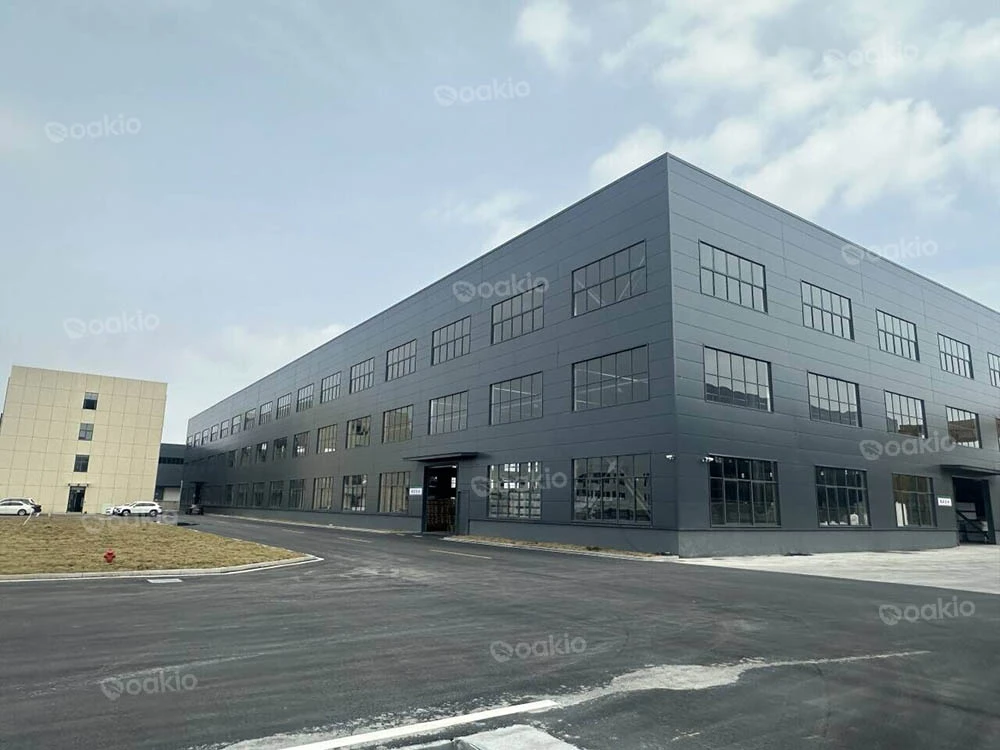
Look into the company’s manufacturing capabilities, product range, export experience, quality-control procedures, and production capacity. It is also worth finding out whether the company manufactures composite decking in-house or primarily operates as a trading company.
For international buyers, experience in overseas markets is particularly valuable. A manufacturer familiar with international customers is more likely to understand requirements related to product specifications, packaging, documentation, shipping, and warranty support.
Request Samples Before Placing an Order
Product samples are one of the most important steps when sourcing composite decking from China.
Photographs can give you an idea of a product’s appearance, but they cannot show its actual surface texture, weight, profile structure, or manufacturing quality. Request samples and inspect them carefully before committing to a large order.
Pay attention to the consistency of the surface, color, dimensions, edge quality, and overall finish. For capped composite decking, examine the protective outer layer and its bonding with the core. If the decking will be used for a commercial or high-value project, samples can also be tested against your own technical requirements.
If you are a distributor, physical samples are useful not only for evaluating the manufacturer but also for presenting the product to your own customers.
Compare Technical Specifications
When comparing composite decking suppliers, avoid making your decision based solely on price. Products that look similar can have significant differences in composition, structure, and performance.
Ask each manufacturer for a technical data sheet and compare the products based on consistent criteria. Depending on the application and target market, this may include density, water absorption, swelling, flexural properties, mechanical strength, fungal resistance, weathering performance, and fire performance.
It is also important to understand how performance claims are supported. For example, a manufacturer may describe a decking product as fade resistant, but the basis for that claim could vary considerably between suppliers.
Reliable technical documentation gives you a clearer basis for comparing products and helps you communicate product performance to your own customers.
Check Test Reports and Compliance Requirements
The testing and certification requirements for composite decking vary depending on the destination market and intended application.
Before placing an order, ask the manufacturer for copies of relevant test reports and certifications. If your market or project requires a specific standard, communicate this requirement before production begins.
For commercial and public projects, additional documentation may be required. Confirm these requirements with your local importer, customs broker, architect, contractor, or other relevant professional rather than assuming that a manufacturer’s standard documentation will be sufficient.
Verifying these requirements early can help prevent costly problems after the products have been shipped.
Compare MOQ and Pricing
After confirming the product specifications, request a formal quotation from the manufacturer.
Make sure you understand exactly what the quoted price includes. A composite decking quotation may cover the boards themselves but exclude accessories, customized packaging, special colors, or other requirements.
You should also compare quotations using the same unit of measurement. Composite decking may be quoted by board, linear meter, square meter, or another unit, and comparing different quotations without converting them to a common basis can lead to misleading conclusions.
Most importantly, consider the total purchasing cost rather than simply choosing the supplier with the lowest unit price. A slightly higher product price may be justified if it comes with better quality, packaging, technical support, or more reliable production.
Understand Incoterms and Shipping Costs
International trade terms determine which party is responsible for transportation, insurance, customs clearance, and other costs.
Common Incoterms used when importing composite decking from China include EXW, FOB, CIF, and DAP. Each option provides a different balance of responsibility between the buyer and seller.
For experienced importers, FOB may provide greater control over international freight arrangements. Buyers with less experience may prefer a solution where the supplier or logistics partner handles more of the transportation process.
Regardless of the trade term, make sure you understand exactly what is included in the quotation. Your final landed cost may include the product price, inland transportation, export charges, ocean freight, insurance, customs duties, import taxes, destination charges, and local delivery.
Consider Container Loading and Packaging
Composite decking is a relatively bulky product, and transportation can have a significant impact on the final cost. Efficient container loading is therefore an important part of the sourcing process.
Before production, discuss the packaging and loading plan with your manufacturer. The supplier should be able to explain how the decking will be protected during transportation and how many boards and accessories can be loaded into a container.
Proper packaging also helps reduce the risk of damage during handling and long-distance transportation. If you are ordering several colors, product models, or accessories, make sure the packing list and container loading plan clearly distinguish each item.
Start With a Trial Order
If you are working with a manufacturer for the first time, consider placing a trial order before moving to larger volumes.
A trial shipment gives you an opportunity to evaluate the actual product quality, color consistency, packaging, production lead time, communication, documentation, and shipping performance.
For distributors, it also provides an opportunity to test the product in your local market before making a larger inventory investment.
Once the supplier has demonstrated consistent quality and reliable delivery, you can gradually increase your order volume.
Establish Quality Control Before Shipment
Quality control should be discussed before production begins rather than after the goods arrive.
Agree with the manufacturer on the specifications and quality standards that will be used for the order. This may include product dimensions, color, surface finish, profile structure, capping quality, accessories, packaging, and quantity.
For larger orders, buyers may also arrange a pre-shipment inspection through an independent inspection company. Establishing clear inspection criteria in advance helps both sides understand what is expected and reduces the possibility of disputes.
Prepare Import and Shipping Documents
Once production is completed, the manufacturer and logistics provider will need to prepare the documents required for export and import.
Depending on the destination country and shipping arrangement, these may include a commercial invoice, packing list, bill of lading, certificate of origin, product test reports, and other compliance documents.
Import regulations differ between countries, so buyers should confirm the specific requirements for their market before the goods leave China. Working with an experienced customs broker or freight forwarder can help ensure that the necessary documentation is prepared correctly.
Build a Long-Term Relationship With Your Supplier
Successful composite decking sourcing should not end when the first container arrives.
For distributors and wholesalers, maintaining a long-term relationship with a reliable manufacturer can provide advantages in product consistency, production planning, customization, technical support, and after-sales service.
A manufacturer that understands your market can also become a valuable partner when you introduce new colors, develop private-label products, expand your product range, or take on larger projects.
For this reason, supplier selection should be based not only on today’s quotation but also on the manufacturer’s ability to support your business as it grows.
Why Import Composite Decking From China?
Importing composite decking from China can offer several advantages to international buyers. China’s established WPC manufacturing industry provides access to a broad selection of decking profiles, colors, finishes, and product technologies.
Manufacturers can also offer different levels of customization depending on the buyer’s requirements. For distributors, this may include private labeling, customized colors, packaging, and product development.
At the same time, China’s established export infrastructure makes it possible for manufacturers to supply composite decking to customers in markets around the world.
The key is to work with a manufacturer that combines competitive production with consistent quality, professional communication, and reliable international service.
Why Choose Oakio as Your Composite Decking Manufacturer?
Oakio is a professional WPC manufacturer specializing in composite decking, cladding, fencing, and related outdoor building products. With a focus on international markets, Oakio works with distributors, builders, contractors, and project customers to provide composite solutions for a wide range of applications.
Rather than simply supplying decking boards, Oakio supports customers throughout the sourcing process, from product selection and samples to technical documentation, packaging, shipping, installation guidance, and warranty support.
Oakio offers multiple composite decking solutions to meet different design and performance requirements. Buyers can also discuss OEM and customization options when developing products for their own markets.
For distributors and importers, choosing a manufacturer that can provide consistent production, dependable quality, technical support, and long-term cooperation is just as important as securing a competitive price.
Final Checklist
Before placing your first composite decking order from China, make sure you have confirmed the following:
- – Product specifications and materials
- – Samples and product quality
- – Technical data and test reports
- – MOQ and complete quotation
- – Incoterms and estimated landed cost
- – Packaging and container loading
- – Production lead time
- – Quality-control requirements
- – Import and shipping documentation
- – Warranty and after-sales support
Conclusion
Importing composite decking from China can be a practical and cost-effective sourcing strategy for distributors, contractors, builders, and other building-material buyers. However, the success of the process depends on much more than finding the lowest price.
A successful importer should first define the required product specifications, carefully evaluate potential manufacturers, request samples, verify technical documentation, understand the total landed cost, and establish clear quality-control requirements before production.
Most importantly, choose a manufacturer that can provide reliable products and support beyond the first shipment. With the right supplier, importing composite decking from China can become the foundation of a stable and scalable long-term supply chain.
Trending Reading

Top WPC Distributor in the Philippines: Why Oakio Leads the Way
The construction and home improvement market in th...

Wholesale Composite Decking: A Complete Buying Guide
The wholesale composite decking market offers sign...

Composite Decking Distributor vs Manufacturer: What’s the Difference?
When sourcing composite decking for a construction...
How to Evaluate Composite Decking Quality Before Ordering
Choosing a composite decking supplier is an import...

What Support Should a Composite Decking Manufacturer Provide?
Choosing a composite decking manufacturer is about...

How to Choose a Reliable Composite Decking Distributor
Choosing a reliable composite decking distributor ...

Why Partner with Oakio for Long-Term WPC Wall Panel Supply
In today’s competitive construction and buil...

How to Become a WPC Wall Panel Distributor
The global construction and renovation industries ...

2026 WPC Wall Panel Design Trends Buyers Should Know
As architectural design continues to evolve, exter...
How to Balance Price and Quality When Choosing a WPC Wall Panel Supplier
As the market for Wood-Plastic Composite (WPC) wal...
Trending Reading

What Are the Differences Between the WPC Board and PVC Board?


[2025 Update] How Long Does WPC Decking Last?


