
WPC Wall Panel Manufacturing Process Explained for B2B Buyers
Wood-plastic composite (WPC) wall panels have become a preferred solution for modern construction thanks to their durability, low maintenance, and design flexibility. For B2B buyers—whether distributors, contractors, or developers—understanding how these panels are manufactured is essential for making informed sourcing decisions.
A clear view of the production process not only helps you evaluate product quality but also reveals the technological capabilities and reliability of a supplier. Leading manufacturers like Oakio emphasize transparency and precision at every stage to ensure consistent results across large-scale projects.
Raw Materials: The Foundation of Quality
The performance of WPC wall panels begins with carefully selected raw materials. Typically, these include wood fibers (or wood flour), thermoplastics such as HDPE or PVC, and a range of additives.
Wood fibers contribute to the natural appearance and texture, while plastics provide structural strength and moisture resistance. Additives such as UV stabilizers, pigments, coupling agents, and fire retardants further enhance performance.
The exact formulation and ratio of these materials are critical. A reputable manufacturer like Oakio maintains strict control over sourcing and formulation to ensure long-term durability and color stability—key concerns for commercial and architectural applications.
Material Preparation and Mixing
Before extrusion, raw materials must be properly prepared. Wood fibers are dried to control moisture content, which is crucial for preventing defects such as bubbling or warping.
Next, all components are precisely measured and fed into high-speed mixers. This stage ensures uniform distribution of materials, which directly impacts the panel’s strength and surface consistency.
Advanced factories, including those operated by Oakio, rely on automated batching and mixing systems to minimize human error and maintain consistency across high-volume production runs.
Extrusion Process: Shaping the Panel
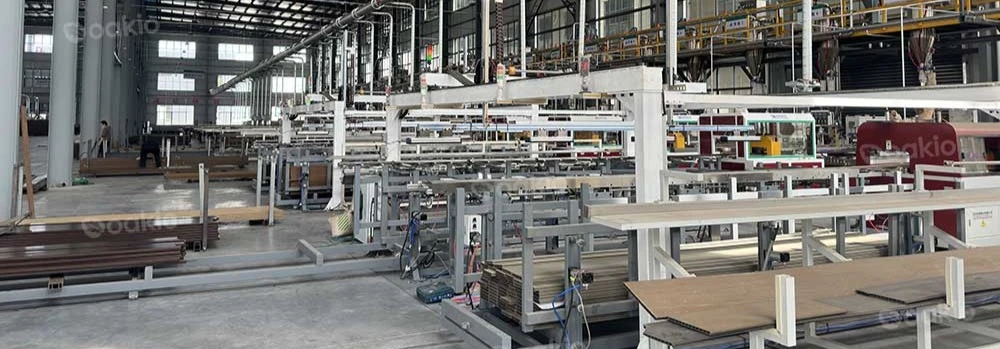
Extrusion is the core of WPC wall panel manufacturing. In this process, the blended materials are heated and melted in a twin-screw extruder, then pushed through a custom mold to form the desired panel profile.
This stage determines the structural design—whether solid or hollow—as well as dimensions and internal geometry. Continuous extrusion allows manufacturers to produce large volumes efficiently, making it ideal for B2B orders.
At Oakio, precision-engineered co-extrusion lines ensure stable output, consistent density, and smooth surface quality, all of which are essential for premium architectural finishes.

Cooling and Calibration
Once the panel exits the mold, it must be cooled and stabilized. This is typically done using water cooling systems, followed by calibration tables that ensure the panel maintains its exact dimensions.
Dimensional accuracy is especially important for wall panel systems, where installation relies on tight tolerances. Poor calibration can lead to alignment issues on-site, increasing labor costs.
Reliable manufacturers like Oakio implement strict calibration protocols to guarantee installation compatibility across batches.
Surface Treatment and Finishing
Surface finishing is what gives WPC wall panels their visual appeal and additional performance features. Common treatments include embossing wood grain textures, brushing for a natural look, and sanding for a refined finish.
Co-extrusion technology—where a protective outer layer is added—further enhances resistance to UV exposure, moisture, and stains. This is particularly valuable for exterior or high-traffic applications.
Oakio offers advanced surface technologies, enabling B2B clients to choose from a wide range of colors, textures, and finishes tailored to project requirements.
Cutting and Profiling
After finishing, panels are cut to specified lengths and undergo edge profiling. This may include tongue-and-groove systems or other interlocking designs that simplify installation.
For customized projects, CNC machining can be used to create specific shapes or profiles. This flexibility is especially important for commercial projects that require unique design elements.
Manufacturers such as Oakio support customization at scale, helping clients meet both aesthetic and functional demands.
Quality Control Throughout Production
Quality assurance is integrated throughout the entire manufacturing process. In-line inspections monitor consistency during extrusion, while final testing evaluates key performance indicators such as:
- – Mechanical strength
- – Water and moisture resistance
- – UV and weather durability
- – Fire performance
Certifications and compliance with international standards (such as ASTM, CE, and ISO) are also essential for global projects.
At Oakio, strict quality control systems and traceability protocols ensure that every batch meets high-performance standards required by B2B clients.
Packaging and Logistics for B2B Orders
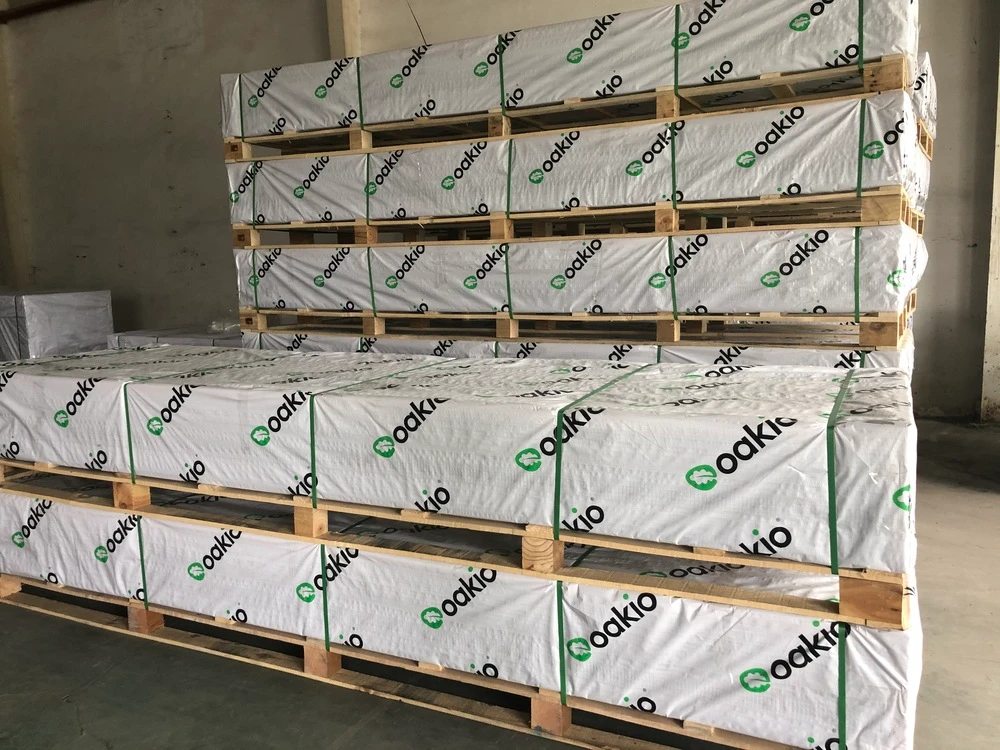
Proper packaging is crucial to protect WPC panels during transportation. Panels are typically stacked on pallets, wrapped, and labeled for easy identification.
Efficient container loading maximizes shipping capacity while minimizing damage risks. Clear labeling and documentation also streamline customs clearance and project logistics.
Experienced exporters like Oakio understand the complexities of international shipping and provide reliable logistics support for global partners.
Key Factors B2B Buyers Should Evaluate
Understanding the manufacturing process helps buyers assess suppliers more effectively. Key considerations include production capacity, automation level, raw material consistency, and customization capabilities.
Lead times and supply chain reliability are equally important, especially for large-scale or time-sensitive projects. Working with an established manufacturer such as Oakio can significantly reduce risks and ensure project success.
Conclusion
The manufacturing process of WPC wall panels is a complex but highly controlled sequence of steps that directly impacts product performance and reliability. For B2B buyers, understanding this process provides a critical advantage when selecting suppliers.
From raw material selection to final quality inspection, every stage matters. By partnering with a trusted manufacturer like Oakio, businesses can ensure consistent quality, scalable production, and long-term value for their projects.
For best results, always request samples, review certifications, and evaluate factory capabilities before placing bulk orders.
Trending Reading

How to Choose a Reliable Dark WPC Decking Supplier for Walkway Projects
Dark WPC decking is a popular choice for outdoor w...

Top WPC Distributor in the Philippines: Why Oakio Leads the Way
The construction and home improvement market in th...

Wholesale Composite Decking: A Complete Buying Guide
The wholesale composite decking market offers sign...
Composite Decking Distributor vs Manufacturer: What’s the Difference?
When sourcing composite decking for a construction...
How to Evaluate Composite Decking Quality Before Ordering
Choosing a composite decking supplier is an import...

How to Import Composite Decking from China
China has become an important sourcing destination...

What Support Should a Composite Decking Manufacturer Provide?
Choosing a composite decking manufacturer is about...
How to Choose a Reliable Composite Decking Distributor
Choosing a reliable composite decking distributor ...
Why Partner with Oakio for Long-Term WPC Wall Panel Supply
In today’s competitive construction and buil...

How to Become a WPC Wall Panel Distributor
The global construction and renovation industries ...
Trending Reading

What Are the Differences Between the WPC Board and PVC Board?

[2025 Update] How Long Does WPC Decking Last?


